
The first leg of the 35-day festive period, which ended with Dussehra, failed to bring any cheer for auto companies. While makers of passenger vehicles struggled to meet demand due to the persistent shortage of semiconductors, a recovery in demand remained elusive for two-wheeler manufacturers despite offers and schemes. The overall season, which ends two days after Diwali, is unlikely to bring any turnaround in either the supply or the demand scenario, said dealers and officials at auto companies.

According to the Indian Fireworks' Manufacturers' Association, the ban would wipe out sales of around Rs 600 crore during the upcoming Deepavali season.
Tamil Nadu plans parallel programme with unique user IDs

Ahead of the peak festive season, India's passenger vehicle makers are staring at a cumulative order backlog of nearly 500,000 units as chip shortage continues to cripple production. The crisis is forcing companies to change their production plans frequently and take a call on the variants they can manufacture based on the availability of semiconductors. The booking numbers are not a true reflection of demand, said manufacturers.

Mementos, the new brand, would be aimed at addressing the need for boutique luxury hotels across various destinations.

The mood at the Hotel Investment Conference South Asia (HICSA), the annual hospitality industry conference was rather upbeat. But hotel brand operators and owners remain cautiously optimistic of the outlook and are living on a hope that a third wave of the pandemic doesn't become a reality. Having just survived the unprecedented zero revenue situation, the two day confrence organised by consulting firm Hotelivate, was dotted with anecdotes and best practices adopted by the hotels of all hues.

Besides their country of origin, General Motors, Ford Motor and Harley-Davidson have another trait in common: all three have failed in India, the world's fifth largest automobile market. All three of them took a tough call to de-prioritise India as a market amid disruption from heightened regulations and sharper focus on capital allocation by the parent.
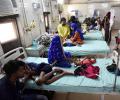
The sudden spike in cases of fever in India has claimed over 100 lives in five states, including UP, MP, Bihar, Haryana, and West Bengal. In UP, Firozabad and Mathura alone have reported 72 cases.

The company said that while the first quarter numbers were at the pre-pandemic levels, it saw a growth of 34 per cent in sales compared to the April to June period of 2020.
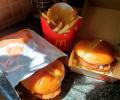
When Amit Jatia, vice-chairman of Westlife Development (WLDL), which operates fast-food chain McDonald's in West and South India, wanted to become the American fast-food giant's local partner in 1995, he had to first convince his family he would remain a staunch vegetarian. As McDonald's - home of the iconic Big Mac - completes 25 years in India, being one of the largest operators in the quick-service restaurant (QSR) segment in the country with over 300 outlets, Jatia has held on to the promise he made to his family. Not one to sit back and watch anyone flip the Big Mac, he gets straight to the meat of the matter when he says McDonald's success menu will see the QSR expand its ever-hungry 'foodprint' by doubling the number of joints and increasing its average unit volume by 35-40 per cent in five years.

First-time buyers of cars and sport utility vehicles (SUVs) have made a comeback, shows last year's data from top passenger vehicle (PV) makers. If the trend persists, it may move the needle on the overall car penetration ratio. India's car penetration ratio is 32 per 1,000 people - one of the lowest, compared to mature car markets like the US and Europe.
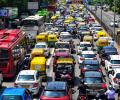
If the court order is implemented, it will lead to an increase in the insurance outgo for car owners by a minimum Rs 50,000 for car and a minimum of Rs 7,000 for two-wheeler owners.
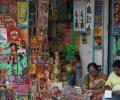
Enter the fireworks city of Sivakasi in Tamil Nadu and you can smell a familiar mix of sulphur, potassium nitrate, aluminium and carbon - familiar because if you've ever burst crackers, say on Diwali or Onam, chances are they were made here. Almost every household used to contribute to India's festive joy by contributing almost 90 per cent of the fireworks made in the country. Before the pandemic, around 300,000 people worked in the industry directly and another 500,000 indirectly. Located 540 kilometres from Chennai, Sivakasi is famous for its fireworks and crackers, along with printing and matches, but is almost a ghost town these days.
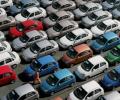
For automakers, the festive season is about raking it in through ramped up sales and attractive consumer offers. However, despite the robust demand, what may spoil the party this year is a global shortage of semiconductors.

The Indian Medical Association states that cases are likely to rise further before coming down in Kerala as about 50 per cent of its population is still susceptible to the virus.

For Mahindra & Mahindra (M&M), which has just started executing a comeback strategy for wresting back ground it lost to rivals, this could not have come at a worse time. The maker of the Bolero Neo and the Thar models on Thursday said it would have to halt production at its automotive plant for a week due to the worsening supply situation of semiconductors.

From social engineering to bearing the cost of COVID-19 treatment to financial reconstruction of Tamil Nadu's debt the debutant chief minister is emerging as a leader with a difference, says Shjne Jacob

In a first step towards succession plan, Chennai-based fast-moving consumer goods (FMCG) major CavinKare on Monday announced the restructuring of its businesses and also roped in the generation next giving charges of separate business verticals. Announcing the restructuring on Monday, CK Ranganathan, chairman and managing director of CavinKare indicated that the business will be split into mainly four different streams - FMCG, ecommerce, retail and research and development.
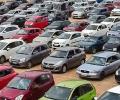
In a rare face off, captains of the auto industry have hit out at the government for not walking the talk. At an industry event in the capital on Wednesday, R C Bhargava, chairman of India's largest carmaker Maruti Suzuki, and Venu Srinivasan, chairman of TVS Motor, questioned the government's intent to support the auto sector. Revenue secretary Tarun Bajaj sat in the audience listening, before his turn came to counter them.

After the hit of the pandemic, India Inc is now worried about the adverse impact of inflation and higher commodity prices on their revenues and margins. The inflation scare is the strongest among manufacturers of consumer goods such as automobiles, consumer durables, and fast-moving capital goods (FMCG). Companies across sectors fear they will not be able to pass on the hike in input costs to their consumers due to weak demand, which, in turn, would lead to a hit on margins and profitability in the forthcoming quarters.
 © 2026 Rediff.com - Investor Information - Advertise with us - Disclaimer - Privacy Policy - Sitemap - Feedback - About us - Terms of use - Grievances